
Why Are Mechanical Plumbing Projects Solved at the Desk, Not on Site?
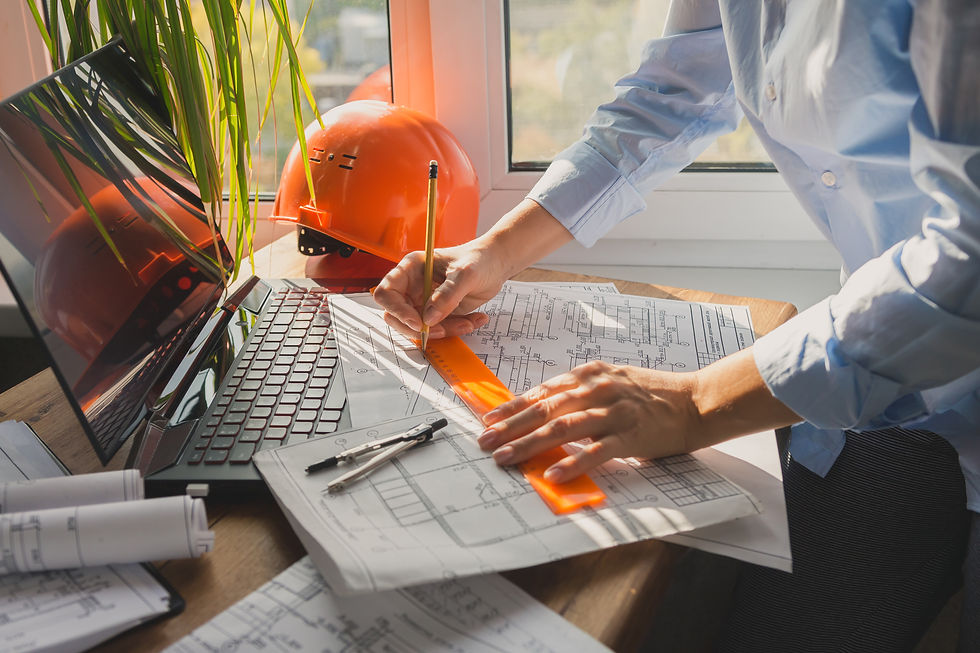
Plumbing revisions, site conflicts, capacity shortfalls… The vast majority of these are not application errors. Their roots are planted much earlier, at the design desk. When mechanical plumbing design is managed correctly, it leaves no surprises on site, operating costs become predictable and system lifespan extends. When managed incorrectly, every stage carries forward the mistakes of the previous one.
A System Cannot Be Designed Without Understanding the Building
The most critical starting point of the design process is understanding not what the building is, but what it will be used for. Two different building types of the same square footage may require entirely different mechanical infrastructures.
Purpose Defines the System
A hospital, a hotel and a production facility may all be designed at the same time, yet each speaks a different engineering language. In a hospital, sterile environment conditions, pressure differential control and uninterrupted system continuity are the priorities. In a hotel, user comfort, quiet operation and energy efficiency are the defining criteria. In a production facility, process requirements, equipment heat loads and occupational safety conditions form the backbone of the system.
Applying a standard solution while ignoring these differences lays the groundwork for systems that work technically but fall short functionally. In Entema Mekanik's design process, building type analysis is not a preliminary step but the fundamental reference upon which all technical decisions rest.
Translating Client Expectations into Technical Language
A client may sometimes request a solution they have heard of or seen, rather than their actual need. At this point, the engineering role is not to implement the request as stated, but to analyze the need and propose the most appropriate technical solution. Budget constraints, operational priorities, future expansion plans and user habits are topics that must be addressed in client meetings without exception. It is not possible to design the right system without asking the right questions.
Regulatory Compliance and Energy Efficiency Must Be Considered Together
In the design process, compliance with technical specifications and current regulations is often treated as a separate checklist. Yet these two topics are not independent of one another; one establishes the legal foundation of the system while the other determines the system's economic lifespan.
Not a Rule, but a Safeguard
Fire regulations, building energy performance regulations, natural gas internal installation standards and relevant standards are documents that must be referenced at every stage of the project. When these rules are not followed, the resulting picture is not limited to legal penalties alone. Systems that cannot be commissioned, damages falling outside insurance coverage and risks threatening user safety are all inevitable parts of this picture.
Efficiency Cannot Be Added Later
Energy efficiency is not a feature that can be integrated into plumbing systems afterwards; it is a design criterion that must be built into the system at the design stage. An incorrectly sized pump, an oversized boiler or insulation details that create thermal bridges place a significant burden on the annual energy bill while also increasing the system's environmental impact. Correct equipment selection, optimum pipe diameter calculation, heat recovery systems and automation integration must therefore be decided at the design desk.
Site Reality Must Be Resolved in the Office
A technically correct project, when it does not align with site conditions, causes serious disruptions during the application stage. Duct routes clashing with structural elements, insufficient shaft spaces, inaccessible valve locations and equipment access panels that cannot be opened for maintenance are among the most common errors that lead to time and cost losses on site.
Site Experience and Office Engineering Must Go Hand in Hand
Site applicability requires working in coordination with architectural and structural projects during the design stage, meticulously analyzing floor levels and ceiling heights, and carrying out on-site surveys when necessary. In Entema Mekanik's design process, site experience and office engineering are carried out together. This way, conflicts that would arise during application are resolved at the desk before project handover.
Ease of Maintenance Is Also a Design Criterion
Mechanical plumbing systems require periodic maintenance for many years after commissioning. Routine operations such as filter replacement, pump maintenance, valve checks and boiler cleaning place a serious burden in terms of both time and cost in systems designed without considering ease of access. For this reason, equipment placement, service clearances and insulation details must be planned with ease of operation in mind, not just technical functionality. The mechanical plumbing system handed over must be equally easy to operate, monitor and maintain.
A Good Project Leaves No Surprises on Site
Mechanical plumbing design is a multi-layered engineering process stretching from understanding the building to regulatory compliance, from energy efficiency to site applicability. The decisions made at every step determine not only the system's current performance but also its operational reliability in the years ahead.
If you want to build your project on a solid engineering foundation and manage the entire process with confidence from commissioning through to maintenance, get in touch with the Entema Mechanic team. With 25 years of experience and an extensive reference portfolio, let us design the right solution for your project together.


